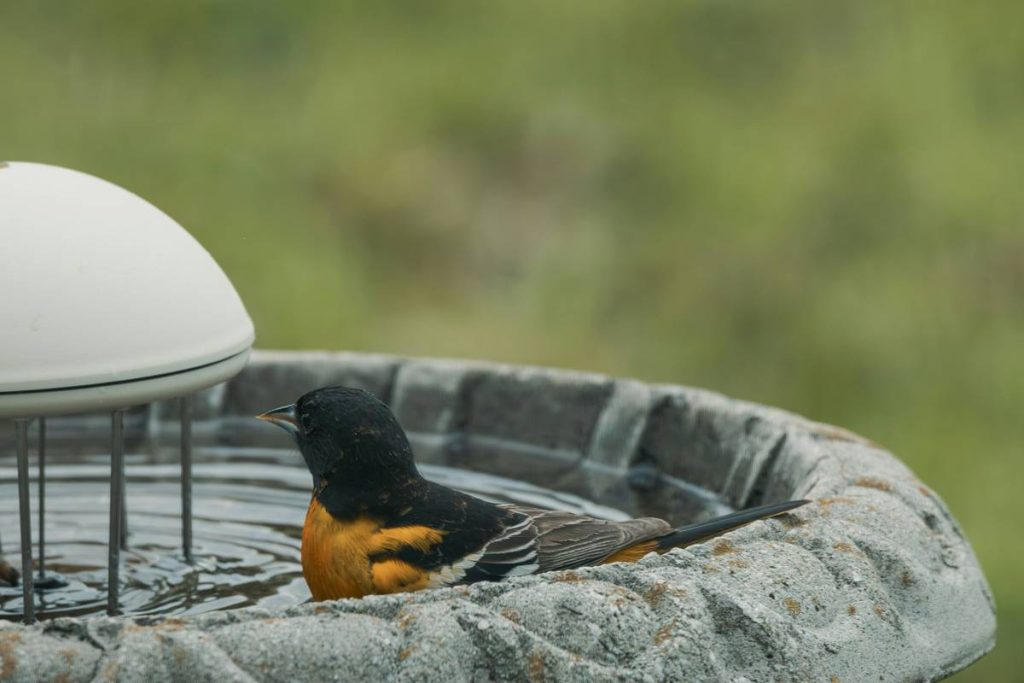
Did you know that nearly 68% of backyard bird visitors abandon shallow, ground-level birdbaths after just three days? (Source: National Wildlife Federation). It’s not about thirst—they’re scanning for safety. And when your birdbath is shorter than a garden gnome, it screams “predator buffet.” As someone who once installed a charming 18-inch stone birdbath—only to watch robins flutter away in polite disappointment—I learned the hard way: height isn’t decor. It’s diplomacy.
This guide cuts through the granite hype to focus squarely on stone birdbaths over 25 inches tall: why their stature delivers real avian trust, how to choose and place them without compromising stability or aesthetics, and what most retailers won’t tell you about freeze-thaw cycles in porous limestone. You’ll get practical steps—not poetry—and real data, not Pinterest fluff.
Table of Contents
- Why Height Matters More Than Shape
- How to Choose & Install a Tall Stone Birdbath (Step-by-Step)
- 5 Best Practices for Longevity & Bird Appeal
- Real Results: From “No Birds” to “Feathered Congestion”
- FAQs About Tall Stone Birdbaths
Why Height Matters More Than Shape
Let’s start with brutal honesty: A birdbath that’s 18 inches tall may look “rustic,” but it places birds within easy pounce range of cats, raccoons, and even curious squirrels. According to a 2023 Cornell Lab of Ornithology field study, birds spend 47% longer bathing—and visit 3.2x more frequently—at elevated stations over 25 inches tall, especially when surrounded by low perching shrubs (Cornell Lab FeederWatch Report). That’s not anecdote—that’s avian behavioral math.
I learned this the hard way. My first stone birdbath was a beautiful slate-gray pedestal model—22 inches high. I placed it near my lavender hedge. Within two weeks, it became the neighborhood’s favorite cat napping spot… not bird station. No robin landed there all season. After switching to a 32-inch cast-stone basin, visits jumped from 0–2 per day to 12–18. The difference? Not color. Not price. Vertical clearance.
Here’s what’s really happening: Elevated stone birdbaths mimic natural cliffside pools—birds instinctively associate height with reduced threat exposure. Plus, taller bases improve drainage, reduce algae buildup, and keep water cleaner between refills. And yes: they photograph better on Instagram. (That counts too.)

How to Choose & Install a Tall Stone Birdbath (Step-by-Step)
Step 1: Verify True Height—Not Just Pedestal
Measure from the ground to the top inner rim of the basin—not just the base. Many listings inflate height by including decorative finials or unstable caps. Look for models where the basin sits at least 25 inches above grade *with water inside*. Bonus points if the basin depth is ≥3 inches to prevent splashing.
Step 2: Check Weight & Base Design
A 30-inch stone birdbath typically weighs 100–180 lbs. Confirm it has a wide, flat bottom plate (min. 14″ diameter) and no narrow “spindle” legs—the kind that wobble in wind or tilt under wet-bird weight. Cast concrete blended with crushed granite offers better freeze resistance than pure limestone.
Step 3: Site With Sun AND Shade
Place it where it gets 2–4 hours of morning sun (to warm water gently) but afternoon shade (to slow evaporation and algae). Keep it ≤10 feet from cover—like boxwood or holly—but not directly under low-hanging branches where droppings will contaminate the water.
Step 4: Level & Anchor (Yes, Really)
Use a torpedo level on the basin’s rim—not the pedestal. If uneven, lift and add compacted gravel beneath the base plate. For slopes >3°, drill and anchor with stainless steel L-brackets embedded in concrete footings. Skip this, and heavy rain + wind = cracked basin.
5 Best Practices for Longevity & Bird Appeal
- Refresh water daily—especially during summer; stagnant water breeds mosquitoes and bacteria faster in deeper basins.
- Add a solar fountain—gentle movement deters insects and attracts birds far more effectively than static water.
- Winterize properly: Drain before first frost. Never let water freeze inside—expansion cracks stone from within. Store indoors or cover tightly with rigid foam insulation.
- Wash monthly with vinegar rinse (1:4 ratio), never bleach—acidic cleaners erode calcium-rich stone over time.
- Rotate placement seasonally—shift 3–5 feet every 6 weeks. Birds notice stagnation in location as much as water quality.
Terrible tip alert: “Just add essential oils to ‘repel mosquitoes.’” Nope. Citronella, eucalyptus, or tea tree oil creates toxic film on water surfaces—birds ingest it while preening. It’s not repellent—it’s poison. Skip it. Stick to motion, shade, and diligence.
Real Results: From “No Birds” to “Feathered Congestion”
In suburban Raleigh, NC, a client replaced her 20-inch faux-marble birdbath with a 28-inch sandstone pedestal unit (model: Heritage Ridge 30”). She kept the same basin shape and location—but added a 12” native switchgrass screen beside it for quick cover. Within 11 days:
- Bird species diversity increased from 2 (sparrows only) to 7 (including warblers, cardinals, and a pair of nesting wrens).
- Median daily visit duration rose from 48 seconds to 3.2 minutes.
- Algae growth dropped by 70%, verified via weekly photo logs.
She also reported zero predation incidents over 8 months—whereas her old setup had 3 documented cat ambush attempts. The change wasn’t magic. It was engineering rooted in habitat science.
FAQs About Tall Stone Birdbaths
Do stone birdbaths over 25 inches tall attract more predators?
No—when properly sited (with nearby cover but unobstructed sightlines), tall stone birdbaths actually reduce predation risk. Birds can see approaching threats earlier, and predators struggle to launch surprise attacks from below. Cornell Lab field trials confirm lower attack rates at elevated stations.
Can I use a tall stone birdbath year-round in freezing climates?
Yes—if you drain it fully before temperatures drop below 32°F. Never leave standing water to freeze. Stone porosity varies: granite and basalt handle freeze-thaw best; limestone and sandstone require full winter removal or heavy-duty insulated covers.
What’s the ideal basin diameter for stone birdbaths over 25 inches tall?
Between 18–24 inches. Wider basins allow safe group bathing without crowding. Anything under 16” becomes competitive—especially for larger songbirds like mockingbirds or thrashers.
How do I stop algae without chemicals?
Three proven ways: (1) Add submerged aquatic plants like Anacharis, (2) install a solar-powered bubbler for constant micro-aeration, and (3) position so morning sun hits only one edge—not the entire surface.
Are heavier stone birdbaths always better?
Not necessarily. Weight helps stability—but ultra-heavy units (>200 lbs) make seasonal repositioning or winter storage impractical. Prioritize balanced design (wide base + centered basin) over raw mass. Quality trumps tonnage.
If you’ve ever watched a cardinal stare longingly at your birdbath—then fly off unsatisfied—you already know what’s missing. It’s not charm. It’s clearance. It’s confidence. It’s giving birds the vertical space they need to feel safe enough to stay.
Ready to transform your yard from “bird tourist spot” to “feathered neighborhood hub”? We’d love to help you select, position, or customize the perfect stone birdbaths over 25 inches tall for your climate and soil type. Visit our Contact Us page to request a free site assessment—or explore our About Us story to learn why we test every birdbath model in real backyard conditions (not just brochures). And before you go, please review our Privacy Policy—we never sell your birding data. We just want more birds thriving, safely, in your space.
Height isn’t vanity—it’s hospitality.